
Why finance accounts get banned on Meta, and how I avoid it
In finance and loans, a disabled account can end a business overnight. After managing 120+ of them with zero permanent bans, here’s what actually causes it and what keeps it from happening.
In most industries, a rejected ad is an annoyance. In finance and loans, a disabled account can end a business overnight, because the whole model runs on paid acquisition. I’ve managed more than 120 accounts in these verticals with zero permanent bans, and I want to be clear about how: not by being lucky, and not by gaming anything. By being boring and careful.
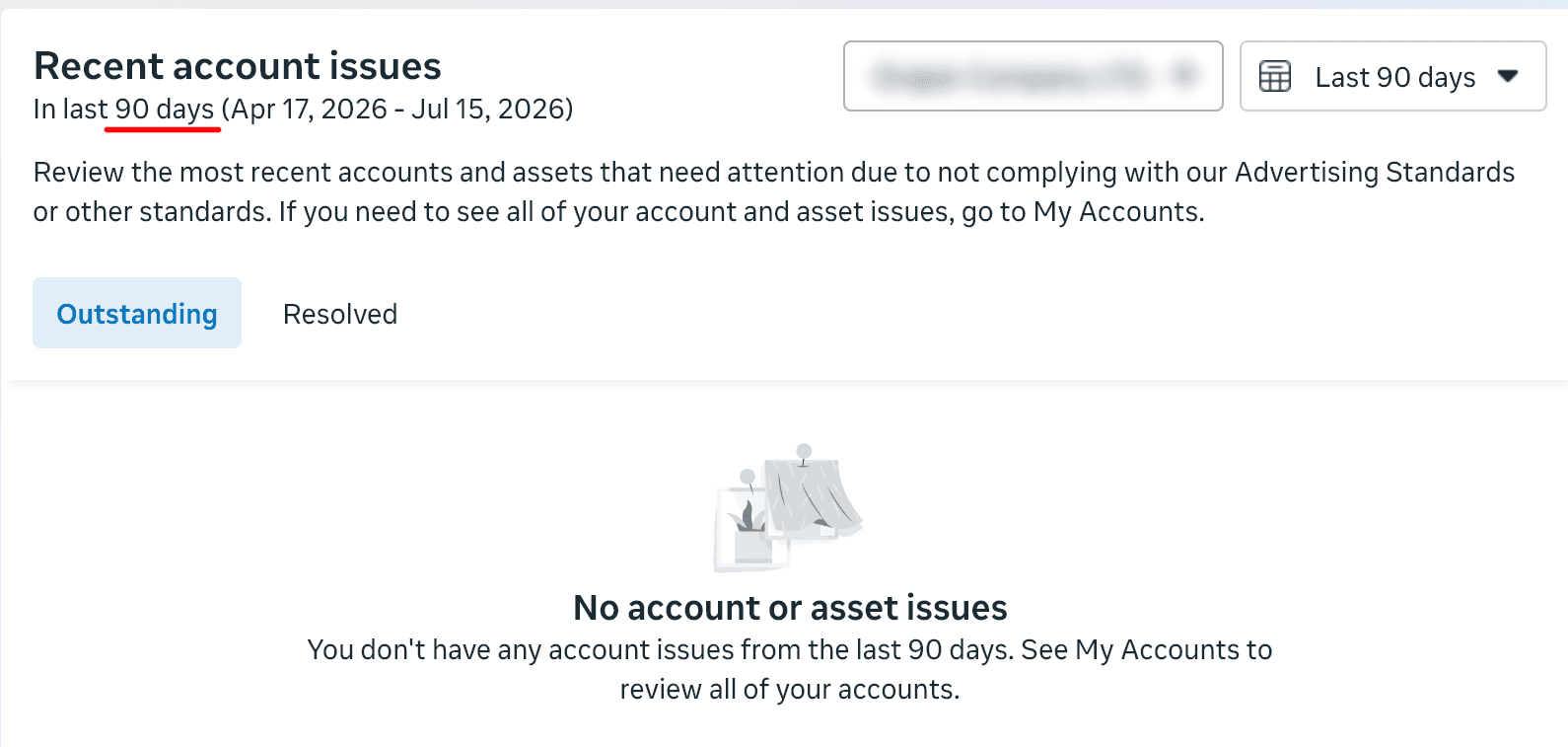
Here’s what actually gets accounts in trouble.
Writing to a personal attribute
This is the number one cause I see. Copy like "Struggling with debt?" or "Bad credit? No problem." implies something about the viewer’s financial situation, and Meta’s classifier treats that as a protected-attribute violation. It doesn’t matter that it’s well intentioned.
The fix is to write to the product or the process instead of the person. "A framework for consolidating your balances" says the same thing without pointing at the viewer. Once you internalize that one rule, most rejections disappear.
Promising an outcome
"Get approved in 24 hours." "Cut your rate in half." Anything that reads as a guarantee is a problem, especially in a regulated category. I keep language in the world of options and process, and I keep the required disclosures where they belong.
The rewrite pattern is the same as above: move the sentence off the outcome and onto the process. "Get approved in 24 hours" becomes "a process built for fast decisions." The claim survives, the guarantee doesn’t, and the classifier reads them very differently.
The account and the landing page disagree
Meta reviews where your ad points, not just the ad. If the ad is clean but the landing page makes a claim the ad doesn’t, or is missing a disclosure, that mismatch can flag the whole thing.
The ad and the page have to tell the same story.
Scaling a shaky setup
The last one is subtle. A setup that’s fine at $2,000 a day gets scrutiny it never had at $200. Spend is attention: at $600K a month, which is where my accounts have peaked, everything gets looked at harder, from the claims to the landing page to the disclosures. I risk-check every setup before I scale it, because the flags that do happen stay small and fixable when the foundation is clean.
A rejection is not a ban
"Banned" gets used for three different events, and the ladder between them is the whole game. An ad rejection is a Tuesday. One ad trips the classifier, it doesn’t run, and everything else keeps spending. An account restriction is serious: the account or one of its assets loses capabilities while Meta takes a closer look. A business disable is the extinction event, and it’s the one that has stayed at zero across my 120+ accounts.
The ladder matters because Meta’s enforcement reads history. A pile of unaddressed rejections is how an account climbs it. Keep the bottom rung clean and the top rung mostly stays theoretical.
What I actually do when an ad gets rejected
First move, every time: read the reason Meta gives, because the fix is different for each one. If it’s copy, I adjust the language against policy best practices, usually the personal-attribute rule above. If it’s the image, I work out what in the image tripped it, and that can be words baked into the image or the content of the image itself. If it’s a payment error, that’s billing: make sure a card is attached and current. If the campaign wasn’t declared Special Ad Category, declare it. There are plenty of rarer reasons, but that list covers most of what I see.
What I don’t do is resubmit blind and hope. Unaddressed repeat rejections are exactly the history that turns Tuesdays into restrictions.
One more habit that pays. When a rejection is wrong, and sometimes it is wrong, appeal it rather than quietly deleting the ad. A reversed appeal is a clean mark on the account’s history. A deleted ad teaches the account nothing and leaves the flag standing.
None of this is exotic. It’s just treating Meta policy as a hard constraint instead of something to push against. Accounts still get flagged sometimes, that’s normal, and I’ve resolved plenty. The goal is to make sure the ones that happen are small.
It’s also why the screenshot at the top of this page says "last 90 days" on it. Meta won’t show a longer window, and I’d rather disclose the cap than let a clean screen imply more than it proves. Anyone promising you zero flags forever is selling something.
If you want a read on how much account risk is sitting in your current setup, the free Meta Ads health check covers compliance along with tracking and strategy.
Common questions
Can a banned Meta ad account be recovered?+
Sometimes. Ad-level rejections are usually fixable, and some account restrictions can be appealed. A permanent business disable is much harder. The realistic answer depends on what triggered it, which is why prevention matters more than appeals.

Written by Keith Guirao, founder of Maven Media. Media buying since 2012, specialized in Meta since 2017. More about Keith →